
Things to Do in Chile in February
February weather, activities, events & insider tips
Peak Season · Premium Pricing
February Weather in Chile
Temperature, rainfall and humidity at a glance
73°F (23°C)
High Temp
55°F (13°C)
Low Temp
0.0 inches (0 mm)
Rainfall
70%
Humidity
Is February Right for You?
Weigh the advantages and considerations before booking
Advantages
- + February is the sweet spot. Patagonia runs on one reliable weather window, December through February, and February sits dead center. The W Trek at Torres del Paine scores up to 17 hours of daylight, so you can wrap a full hiking day and still catch the granite towers flaming pink above Lago Pehoe with two full hours of gold light left. Refugios are fully staffed, the circuit is open both ways, and the long days shrink your schedule so a 5-day trek feels like seven.
- + Tapati Rapa Nui on Easter Island runs for roughly two weeks in early-to-mid February. This festival turns an island 3,700 km (2,299 miles) from the Chilean mainland into something unmatched anywhere else. Rapa Nui families split into rival clans and battle in contests passed down for generations. The Haka Pei sends competitors hurtling down Maunga Pu'i on banana-tree-trunk sleds at speeds nearing 80 km/h / 50 mph. Outrigger canoe races churn Hanga Roa harbor. Traditional tattooing and weaving draw crowds. The Takona full-body painting performance mesmerizes. All 8,000 residents come alive, not for tourists. But for each other.
- + Late February snaps the Colchagua Valley into high gear. Carménère and Cabernet vines sag under their own weight, grapes ready to burst. Walk the rows at 3 p.m. and the air tastes like warm grape juice. This is the only window when estates run harvest-participation tours. Miss it and you won't get another chance. Shift west. The Casablanca Valley lies 90 km (56 miles) from Santiago and barely 20 km (12 miles) from the Pacific. Sauvignon Blanc reaches peak production here. You will sip the cold-ocean snap while staring at vineyards still bright green, leaves rustling like money.
- + Fourteen to sixteen hours of daylight in February, that's the Lake District's gift. Around Pucón, you'll summit Villarrica Volcano (2,847 m / 9,341 ft) by noon and still soak in thermal pools all afternoon. In the Atacama, those extra hours let you hit salt flats at dawn and catch dusk at Valle de la Luna, watch the salt formations shift from white to gold to deep amber as the sun drops behind the Andes.
Considerations
- − February is Chilean school holidays, the entire country moves at once. Torres del Paine's mountain refugios and campsites require reservations made 6 to 8 months in advance for February slots. This is not a guidebook exaggeration. Travelers searching Patagonia availability in November for February routinely find the best huts already locked. If you haven't pre-booked your trekking route and overnight shelter, you're planning a different trip than you intend.
- − February in Santiago is hot, dry, and on bad days, visibly brown. The city sits in the Central Valley at 520 m (1,706 ft), ringed by mountains that trap exhaust and particulate matter under thermal inversions when the wind drops. On those days, the Andes vanish behind a tan haze and the city's air quality enters unhealthy territory. Santiago has genuine highlights, Barrio Italia, the Mercado Central, the view from Cerro San Cristóbal. But planning more than two days there in February is a gamble you'll likely regret.
- − In February, Chile's central coast, Viña del Mar, Algarrobo, Pichilemu, belongs to Santiago families. Beaches pack tight on weekends. Parking becomes a 45-minute project. Restaurant queues snake half a block. Accommodation costs two to three times the off-season rate. The coastal highway on Friday afternoons crawls at parade speed. The payoff? Everything pulses with life. Seafood arrives straight from the boat. A Chilean summer beach weekend crackles with its own raw energy. Just don't expect peace.
Best Activities in February
Top things to do during your visit
Torres del Paine W Trek and Full Circuit
February is Patagonia at its best. The W Route draws crowds, but "crowded" here means 40 people on a summit, not 400. Four to five days, four highlights. Base Las Torres delivers the granite towers, 2,500 m / 8,202 ft, rising above a glacial lake that flips from teal to slate with the sky. Valle del Francés follows: a natural amphitheater of hanging glaciers and rock walls that look ready to peel off. Finish at Mirador Glaciar Grey, where continent-sized ice calves into turquoise water with a crack you feel in your ribs. Seventeen hours of daylight in February means you can linger. No rush. Evenings at mountain refugios, wet gear steaming over a wood stove, wind rattling tent fabric, are the point, not an interruption. Add the full circuit (about 9 days) and you reach the massif's backside. Half a day without another trekker. February weather cooperates most often. Yet Patagonia still turns on a dime: calm morning, 100 km/h (62 mph) gust by lunch.
Booking Tip: Six to 8 months. That's the bare minimum if you want a bed in Torres del Paine next February, book through the park's official concessionaire system or forget it. Mirador Las Torres and Paine Grande, the two huts everyone fights over, sell out within days once the September window cracks open. No exceptions. CONAF rangers will demand proof of confirmed shelter before you cross the gate, no paperwork, no entry. Check the guided trek options we've listed in the booking section below.
Easter Island Tapati Rapa Nui Festival and Moai Circuit
Rapa Nui's 8,000 residents split into two clans every February. The two-week cultural competition turns the entire island into a battleground of tradition. You'll witness the Haka Pei sled race, bodies hurtling down volcanic slopes on banana trunks. Outrigger canoes knife through Hanga Roa harbor while teams race for clan honor. Body painting and feather-crown competitions transform participants into living art. The Koro endurance trial breaks strong backs: enormous loads of food and plantains strapped to runners who cross the island's interior on foot. Rano Raraku quarry freezes 400 unfinished moai mid-carve, volcanic stone figures trapped at impossible angles where work simply stopped. Most unsettling archaeology site you'll ever see. The Ahu Tongariki sunrise justifies the 5 AM alarm, fifteen moai silhouettes against pink Pacific sky. Pure theater. Remember: the island floats 3,700 km (2,299 miles) from mainland Chile in open ocean. Flights from Santiago run twice daily when weeks cooperate. Weather cancellations happen. Book your return accordingly.
Booking Tip: Seats on the Santiago, Pudahuel Airport (SCL) to Mataveri International (IPC) route disappear 3 to 6 months ahead for February. Fewer than 50 guesthouses and lodges exist on the island. Book accommodation the instant you lock in your flight. The Tapati festival schedule drops each year from the local municipality. Events scatter across the island and cost nothing to attend. Current island tour options sit in the booking section below.
Atacama Desert Stargazing, Salt Flats, and High-Altitude Geysers
The Atacama is the driest non-polar desert on Earth. February is dry season, zero atmospheric interference, essentially zero humidity at altitude, and light pollution vanishes about 15 km (9 miles) outside San Pedro de Atacama. At El Tatio geyser field, 4,500 m (14,764 ft) up, predawn air carries sulfur tang and sits near -5°C (23°F). Steam columns erupt at sunrise, prehistoric against the pink-and-orange altiplano sky. San Pedro itself sits at 2,407 m (7,897 ft). Daytime temperatures push 28°C to 30°C (82°F to 86°F), but altitude slices what would be oppressive heat. The Salar de Atacama, Chile's largest salt flat at roughly 3,000 km² (1,158 sq miles), hosts flamingos wading through shallow brine lagoons in impossible numbers. Stargazing here is exceptional. The Milky Way on a new-moon night at this altitude is dense enough to cast faint shadows. Several established observatories outside town admit visitors specifically for nighttime sessions. Two realities: altitude sickness hits regardless of fitness, and the first day at elevation is not the day to push it.
Booking Tip: El Tatio tours leave San Pedro at 4 AM sharp, peak eruption happens at sunrise, so every licensed operator sticks to this timetable. February crowds? Reserve 2 to 3 days ahead or you'll miss out. Stargazing observatory tours fill just as fast. Check the booking section below for what's still open. Spend at least one full day in San Pedro first, your body needs to adjust before climbing higher.
Colchagua Valley Wine and Pre-Harvest Estate Tours
Late February kicks off vendimia, the grape harvest, in Chile's warmest red wine valley, 180 km (112 miles) south of Santiago in the O'Higgins region. Colchagua Valley turns out some of Chile's most respected Carménère, Cabernet Sauvignon, and Syrah, and in the weeks before harvest the vineyard rows hang heavy and green, the late-afternoon air between the vines carrying a fermented warmth that doesn't exist any other time of year. Several estates operating for over a century run harvest-participation experiences where you cut grape clusters beside field workers before heading to the cellar for barrel tastings. The nearby town of Santa Cruz hosts the Museo de Colchagua, an unexpectedly serious regional institution with pre-Columbian gold artifacts and reconstructed indigenous structures that hold up as a standalone visit. Access from Santiago runs through San Fernando on Ruta 5, roughly a 3-hour drive south, or via regional bus from Alameda terminal. The Casablanca Valley, 90 km (56 miles) west of Santiago near the coast, delivers a cooler counterpoint for Sauvignon Blanc and Pinot Noir, with ocean breezes keeping temperatures notably more comfortable than the inland valleys during summer.
Booking Tip: Harvest slots at the big estates vanish weeks before February. Call them yourself or check the booking section for licensed operator tours. Driving yourself? Easy. Rent a car, the roads linking the main bodegas are paved, signed, and the valley is small enough to knock off four or five estates in a day.
Villarrica Volcano Summit and Pucón Lake District
Pucón sits at the edge of Lago Villarrica in the Chilean Lake District, 780 km (485 miles) south of Santiago. The volcano that defines the skyline, Villarrica, an active stratovolcano at 2,847 m (9,341 ft) with a lava lake visible as a red glow at the summit on clear nights, is the reason most people come. The summit route requires crampons and ice axe, both provided by licensed guides. It starts on glacier ice that crunches underfoot before dawn. The ascent takes around 4 to 5 hours on the snow and hardened lava slope. The descent takes 20 minutes sliding down the permanent snowfield on your jacket. Beyond the volcano, February brings warm enough temperatures to kayak Lago Villarrica's glacier-fed water and hike the Parque Nacional Huerquehue trails through monkey-puzzle araucaria forests (some of the trees are over 1,000 years old) to high mountain lakes where the water is cold enough to make you gasp. Termas Geométricas, 66 km (41 miles) from Pucón through a river gorge, is the reward at the end of hard hiking days: 20 thermal pools at different temperatures, carved into a narrow ravine and designed to look as though no architect touched the place.
Booking Tip: Villarrica summit attempts hinge on weather and volcanic mood swings, SERNAGEOMIN posts fresh alerts daily, and the best guides pull the plug without hesitation when the mountain growls. Reserve your guide 3 to 5 days ahead, then phone again the night before to confirm the summit is still on. Termas Geométricas locks out walk-ins even in February. Check the booking section below for current tour options.
Carretera Austral Road Trip, Northern Patagonia
The Carretera Austral is 1,240 km (771 miles) of mostly unpaved two-lane road that punches south from Puerto Montt into a landscape that forgot the 21st century. Fjords slice 50 km (31 miles) inland through temperate rainforest. Hanging glaciers dangle roadside. Rivers run so clear you could read a page through 3 m (10 ft) of water. February is the only month the entire road stays reliably passable without four-wheel drive on the harder gravel sections. The northern sector, Puerto Montt to Coyhaique, roughly 600 km (373 miles), delivers the road's highlight reel. Parque Pumalín guards alerce trees that rank among the continent's oldest living organisms. Some exceed 3,600 years and stretch 60 m (197 ft). The Ventisquero Colgante glacier outside Chaitén drops from a cliff face, calving ice chunks into a river gorge below the viewing platform. The ferry at Hornopirén runs on a schedule that may or may not match the posted time. The wait hardly matters when the surroundings look like this. Budget 5 to 7 days minimum for the northern section.
Booking Tip: You'll need a real 4x4, not an SUV posing as one, and two full-size spares. The gravel rips tires apart. One spare is wishful thinking. Book the Hornopirén and Caleta Gonzalo ferries now, February sailings with Naviera Austral sell out weeks in advance. Check the booking section below for current guided road-trip options.
Explore More Activities in Chile
Didn't see anything interesting yet?
Browse Viator's full catalog of tours, day trips, food experiences, and private guides in Chile.
See All Chile Tours on ViatorWhere to Stay in Chile in February
Hand-picked hotels across price tiers for February travellers.
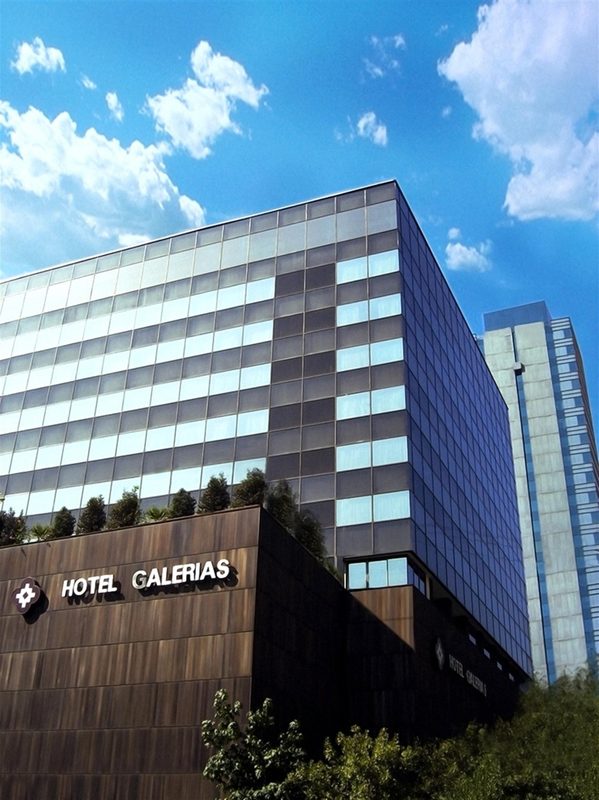
★★★★
Mid-Range
Almacruz Hotel y Centro de Convenciones (Ex Galerías)
From $66 / night
Check Prices on Trip.com →
Packing Checklist
Bookmark this page — your progress is saved between visits
Need the full list with shopping links?
Climate-specific gear, brand recommendations, and what to leave at home.
View Chile Packing List →Essential Tips
Insider knowledge and common pitfalls to avoid
Insider Knowledge
A new moon in February drops you into the Atacama's sweet spot, dead center of the dark sky window when the galactic core is so dense overhead it throws your shadow. At 4,000 m (13,123 ft), a full moon erases the Milky Way as cleanly as any city glow. Pretty sky, sure. Not transformative. The Atacama's best stargazing runs on lunar math. Check the calendar before you lock in your nights. Pick the wrong phase and you've made a planning mistake you can still fix.
Santiago's Mercado Central, the covered iron-and-glass seafood market built in 1872 near the Mapocho River, operates at two entirely different speeds. Tourist restaurants inside the central hall? Fine. Predictable. The wholesale vendor stalls running along the market's perimeter, where Santiago families and restaurant buyers shop, are considerably cheaper and frequently better. Skip the English menus. Point at what the person next to you ordered. Eat standing up.
Book Easter Island flights and accommodation together, months ahead. The island runs on 30 guesthouses and one, maybe two, daily flights from Santiago. February slams into Tapati Rapa Nui, drawing visitors from Latin America and Europe like clockwork. First-timers always check the outbound leg, then forget the return. A sold-out seat back to the mainland strands you 3,700 km (2,299 miles) from anywhere.
Skip the historic center. In February, Santiago's best neighborhoods for eating and wandering are Barrio Italia and Barrio Lastarria in Providencia. Barrio Italia, centered on Avenida Italia and the surrounding streets, houses coffee roasters that have been operating since the 1970s. You'll find used bookshops. Restaurants here have fed locals for decades without rebranding for tourists. Lastarria offers art deco architecture. Weekends bring a small antique market. Independent wine bars stay open late. Neither neighborhood suffers from the downtown summer heat to the same degree as the colonial core.
Avoid These Mistakes
Torres del Paine refugios for February? Book now. November is too late. The booking window opens in September and the most-requested mountain huts at Mirador Las Torres and Paine Grande vanish within days. If you're reading about a February Patagonia trip in late autumn, stop reading and search for available slots immediately. Don't wait. The alternative, camping in the backcountry without pre-booked shelter, faces growing restrictions inside the park.
Treat the Carretera Austral like a standard driving road and you'll regret it. This is a gravel track in variable condition, and punctures are so common on the harder sections that experienced drivers carry two spare tires. The gaps between gas stations can exceed 200 km (124 miles) on some stretches. The "adventurous road trip" framing underplays how remote the uninhabited sections are. Rent a low-clearance compact car and assume things will be fine, you'll spend an afternoon waiting for a tow.
Five or six days on Easter Island without checking what's beyond Tapati Rapa Nui? That's the classic blunder. The island stretches 24 km (15 miles) long and 12 km (7 miles) wide, tiny, but packed. The main moai circuit, Rano Raraku quarry, Ahu Tongariki, Ahu Akivi, the restored Ahu Nau Nau platform at Anakena beach, takes 3 to 4 days at an unhurried pace. Tapati Rapa Nui is the only reason to stay a full week. Skip the festival and you'll hit day four wondering why you're still here.
Ready to plan your trip to Chile?
Now that you've got the research covered, here's where to go next.